
What happens after the breakthrough? A material can work in a lab. The harder question is whether it can survive the factory, the market and the scrutiny that comes after. This month’s Set in Stone® explores what it takes to turn material innovation into real-world applications, measurable results and better business decisions.
Okeanos® Business Newsletter – August 2026
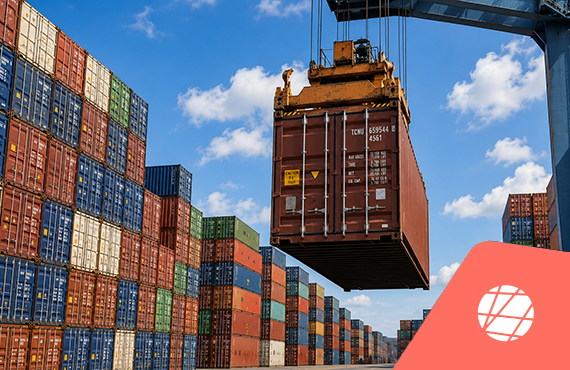
Exciting Doesn’t Scale
A breakthrough proves that something can work. It does not prove that the world can run on it. In 1903, the Wright brothers proved powered flight was possible. That didn’t make aviation an industry. The harder work came afterward: the infrastructure, systems and commercial ecosystem that made flight repeatable and useful to the world.
Packaging faces the same challenge. The packaging industry has no shortage of new materials. What it lacks are materials that can consistently perform on real equipment, at commercial volumes, and in real-world markets. Both Harvard Business Review and the World Economic Forum have pointed to a recurring challenge: moving an innovation from prototype to scale requires far more than a technology that works. It requires the infrastructure, capabilities and partners to make it repeatable.
The challenge is no longer invention. It is making it real. A successful pilot answers one question: Can we do it? A successful market answers a harder one: Can we keep doing it, reliably, economically and at scale?
Between those two questions sits the harder part: manufacturing capability, supply chains, unit economics, infrastructure and regulation. The decisions that determine whether an innovation becomes part of everyday business or quietly disappears. This is why the most consequential innovation is not always the most radical. It is often the one that removes the fewest barriers to adoption.
For packaging, the question is no longer simply whether a new material represents a technological advance. It is whether that advance can survive contact with a real factory, a real supply chain and a real commercial market.
Made From Stone™ has answered that question across applications that have nothing in common except that they all ran. Courier and e-commerce bags in Argentina. Food-contact packaging distributed through retail channels in Ecuador. Fragrance cap components for O Boticário’s Eudora Royal line in Brazil. Household packaging in the United States and Thailand. Different applications, different markets, different manufacturing requirements. All are in commercial production. That is not a technology claim. It is a production record.
The breakthrough gets attention. The bridge creates impact.
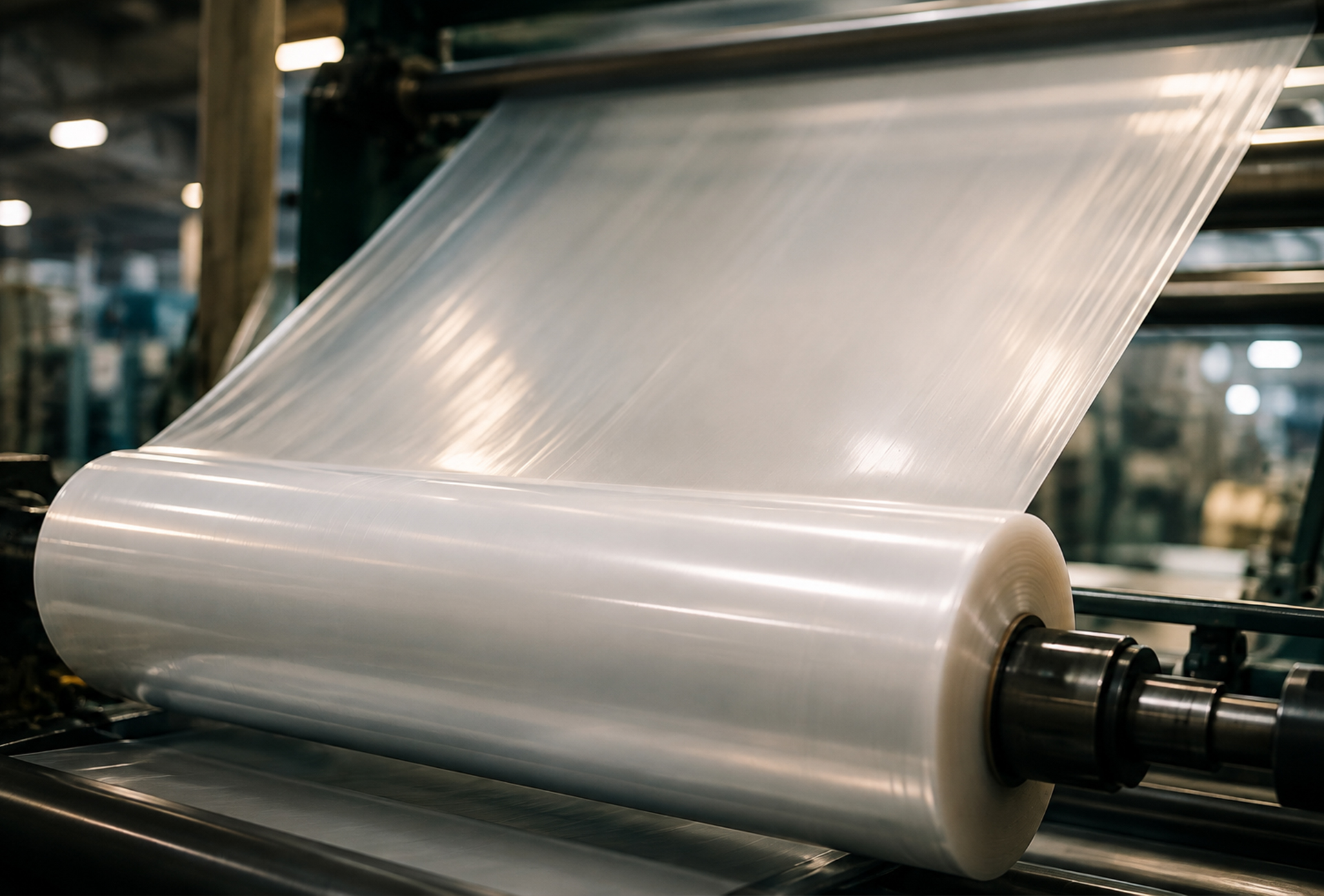
We Tested It. Then We Ran It.
Brazil is one of Latin America’s most demanding packaging markets, combining intense cost pressure with growing demand for reduced plastic content and more efficient material solutions. Caio Moreno, Okeanos Technical Consultant, works at the intersection of material performance and commercial production. For him, evaluating a new material starts with practical questions: does it meet the application requirements, run on existing equipment and remain consistent at production volumes?
We asked Caio what happens when Made From Stone™ moves from testing to a real manufacturing environment.
What are the first technical questions you ask when evaluating a new packaging material?
First, we need to understand the final application and the main attributes required to maintain product integrity. We also need to understand the end customer’s specifications, particularly the required mechanical properties, while looking for opportunities to reduce costs and develop more sustainable formulations.
What separates a successful material trial from one that is ready for commercial production?
A successful trial requires a robust validation process that meets both machine parameters and mechanical requirements. Approval of the pilot batch, repeatability and production volume are essential before a material is ready for commercial production.
What did you learn from working with Made From Stone™ that could only be learned in real production?
Real production showed how much the process conditions could be optimized. We were able to improve thermal conditions, reduce production temperatures and increase speeds while optimizing machine conditions without putting additional stress on the process parameters. During validation, machine temperatures could be reduced by approximately 10°C while increasing production speeds and improving processing conditions.
The ability to transform the film into a finished product, such as bags, was also important. Moving from material development to a finished product during validation can accelerate the transition from testing to commercial application.
What will determine which new materials actually scale in Brazil?
Brazil has significant opportunities across both flexible and rigid packaging, but the market demands high-performance materials that meet real processing and mechanical requirements. In flexible packaging particularly, the opportunity is to develop sustainable solutions that can meet those technical conditions while responding to the market’s demand for more efficient material use.
A material does not earn its place on the factory floor because it works once. It earns it when it can be validated, repeated, optimized and converted into a finished product at commercial volumes.
Talk to us about running Made From Stone™ in your facility. Reach out to trade@madefromstone.com
Your Packaging Is Generating Data. Who Is Using It?
For years, packaging data had clear owners. Engineers managed specifications, procurement managed suppliers, sustainability teams managed environmental assessments and marketing managed the story. That separation is becoming harder to maintain as companies face increasing demands for environmental data, traceability and substantiated claims.
And that creates a different question: Who owns the data behind the material choices a company makes?
Consider a Life Cycle Assessment. It may begin as a sustainability exercise, but the information it generates can influence procurement, customer requirements, regulatory reporting, risk assessment and broader business decisions. The report itself is not necessarily the most valuable asset. The ability to measure, document and defend a material decision is.
A sustainability team asks what the impact is, procurement asks what it means for suppliers, a customer asks whether a claim can be substantiated and leadership asks what it means for the business. Different questions. Increasingly, the same data provides the answers.
This is why material decisions are becoming part of a much broader information architecture inside companies. The organizations building reliable data around materials today are not simply preparing better sustainability communications. They are building infrastructure for better decisions tomorrow.
The commercial implications are becoming clearer, too. The packaging that gets approved, stocked and renewed is increasingly the packaging that comes with the information needed to support the decision behind it.
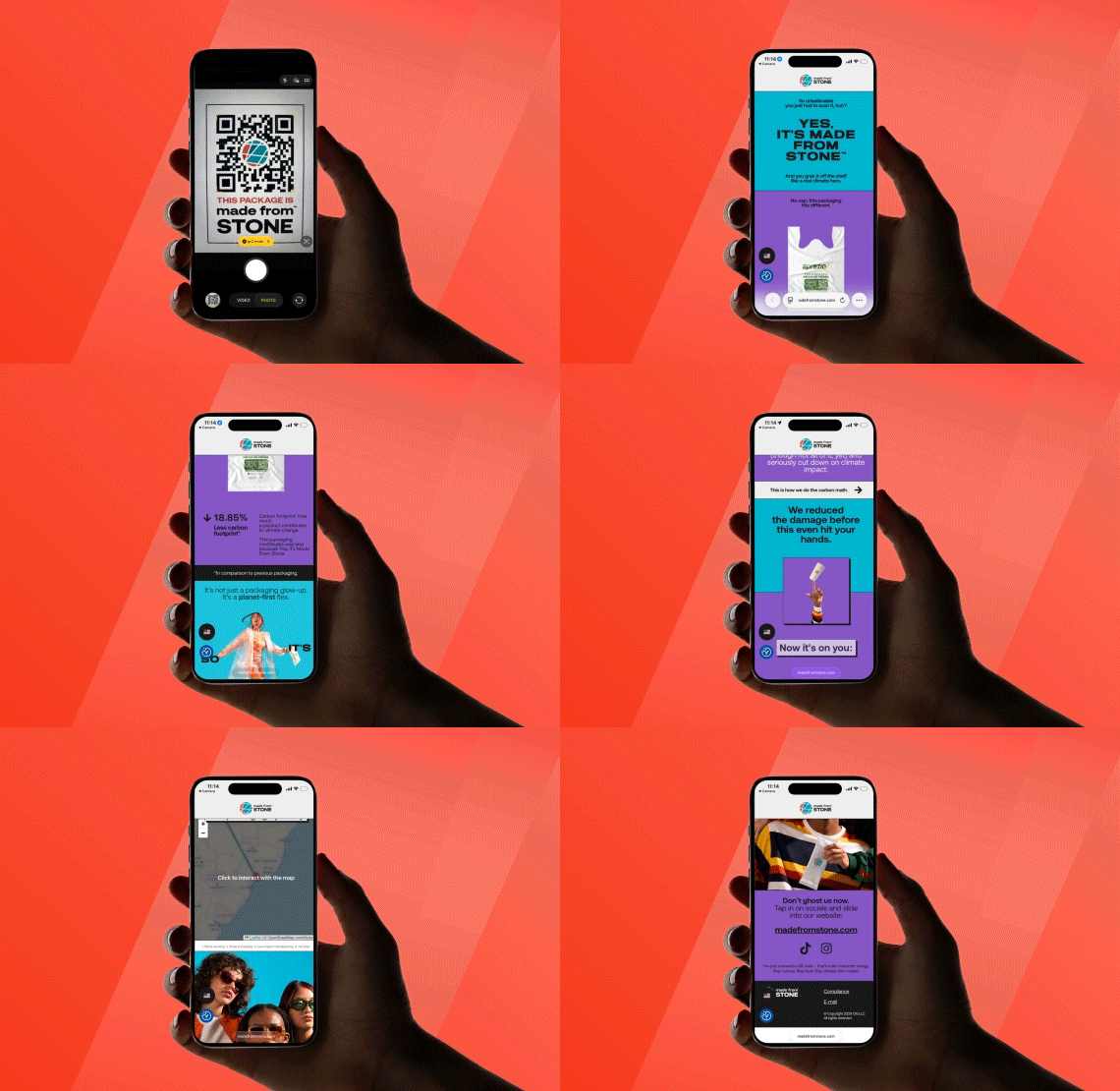
Made From Stone™ applications come with product-specific LCA data, quantifying plastic reduction and CO₂ impact for each application, in a format built to travel across procurement, operations, customers and regulatory reporting.
The question is no longer simply what a package is made from. It is what the organization can know, document and demonstrate about that decision.
Explore how product-specific environmental data can support more informed packaging decisions.

The Orchestra in Plain Sight
In this article, Massimo Martinotti explores why the curtain is coming down on corporate storytelling, and why credibility increasingly depends on what companies can actually prove behind the scenes.
Massimo Martinotti is the founder of Starlight Effect, a strategic narrative consultancy. Over more than thirty years, he has helped brands across thirty countries translate identity, culture, and ambition into meaningful narratives. Learn more about Massimo and his work.
Wagner opened his theater in Bayreuth in 1876 with the orchestra hidden from view. He lowered the musicians into a pit beneath the stage and called the space between audience and stage the mystic gulf. The audience heard the music without seeing the conductor, the music stands, or the bows moving. The lights dimmed, the curtain rose, and the machinery remained out of sight
Branding once worked much the same way. Companies chose what the public would see and kept the rest below the stage. They could say more than anyone could verify.
That is no longer true. Labels now carry traceability information, companies publish audits and ingredients are verified by people with no stake in the outcome. Employees write openly about their employers, lawsuits are indexed, suppliers are named and independent analyses circulate before a campaign has even finished running.
The audience has entered the pit. A claim that does not hold up can outlive the campaign that made it.
One way to understand this complexity is through three narratives that every company runs at once. The framework draws on Erving Goffman’s dramaturgical view of social behavior, applying it to the way organizations think, operate, and present themselves.
The Offstage Narrative is the vision and strategy of the people who lead the company. The Backstage Narrative is how the organization actually works: its culture, decisions, habits, and processes. The Frontstage Narrative is what the company puts before customers, audiences, and society.
For a long time, companies could manage these narratives separately. A strong Frontstage could cover for what was weak behind it. Now people can move across the boundaries and compare what they find.
Someone tracing a product’s origin has entered your Backstage. So has a candidate trying to understand how you treat employees before accepting an interview. Compare a company’s public claims with where it invests its time and money, and you are reading its Offstage against its Frontstage.
Frontstage still matters. But credibility no longer begins with the message. A public promise holds only when the company is already living it internally and when its strategy explains why that promise was made.
Without that, Frontstage becomes a façade. And façades can come down in hours.
This should change where companies invest. If there is something real behind the curtain, scrutiny can be useful: what people discover confirms what they have already been told. If a company has invested only in the surface, every inquiry becomes an audit it did not prepare for.
We call the cost of that gap the Incoherence Tax. When the gap was harder to see, its costs appeared separately: a slower sales cycle, a strong employee leaving, a buyer hesitating. Now the pattern is easier to see. When what people find does not match what they were told, the cost becomes visible.
The work has moved inward. Companies need to close the gap the public is already measuring from the outside. They need a company that can withstand a closer look.
Getting the three narratives to match used to be treated as a matter of taste. Now it is a matter of proof.
Wagner could cover the pit because his audience agreed not to look. They no longer do. The show has to hold with the orchestra in plain sight.

Rockstar of the Month
The people who power Okeanos.
Izumi Takeda 武田 泉 | Japan Administrative & Compliance Lead | Tokyo, JP
Izumi helps keep Okeanos Japan moving on solid operational ground. Through compliance, coordination, and careful behind-the-scenes support, she gives the team the structure it needs to grow with clarity and confidence.
Her Impact: She helps build a stable operational foundation for Okeanos Japan by supporting compliance, coordination, and smooth collaboration with global teams.
What her role makes possible at Okeanos
Strong growth needs strong foundations. Izumi supports the Japan team by keeping administrative and compliance processes organized, aligned, and reliable, helping the business move forward with clarity and confidence.
Through careful coordination with partners, local teams, and global stakeholders, she helps create the structure that allows Okeanos Japan to operate smoothly and keep growing.
What her role touches
- Support administrative and compliance processes for the Japan team
- Coordinate with business partners and global teams to keep work aligned
- Build operational structure that helps the business move forward effectively
In Izumi’s words
What does your role enable at Okeanos?
My role helps build a stable operational foundation for the Japan team and ensures smooth coordination with our global teams, allowing the business to move forward effectively.
What’s something people don’t usually see?
Through behind-the-scenes work, such as coordinating with various business partners and handling detailed compliance matters, I support the entire team so that it can operate smoothly.
What motivates you?
I’m motivated by contributing to meaningful environmental impact and supporting the growth of the Japan team.
Outside work: I enjoy spending time in nature, walking, being near the ocean, and relaxing with my son.
Learn more about career opportunities at Okeanos.