
Performance matters. So do costs, claims and the stories materials tell. This month, Set in Stone® looks beyond the package.
Okeanos® Business Newsletter – November 2026
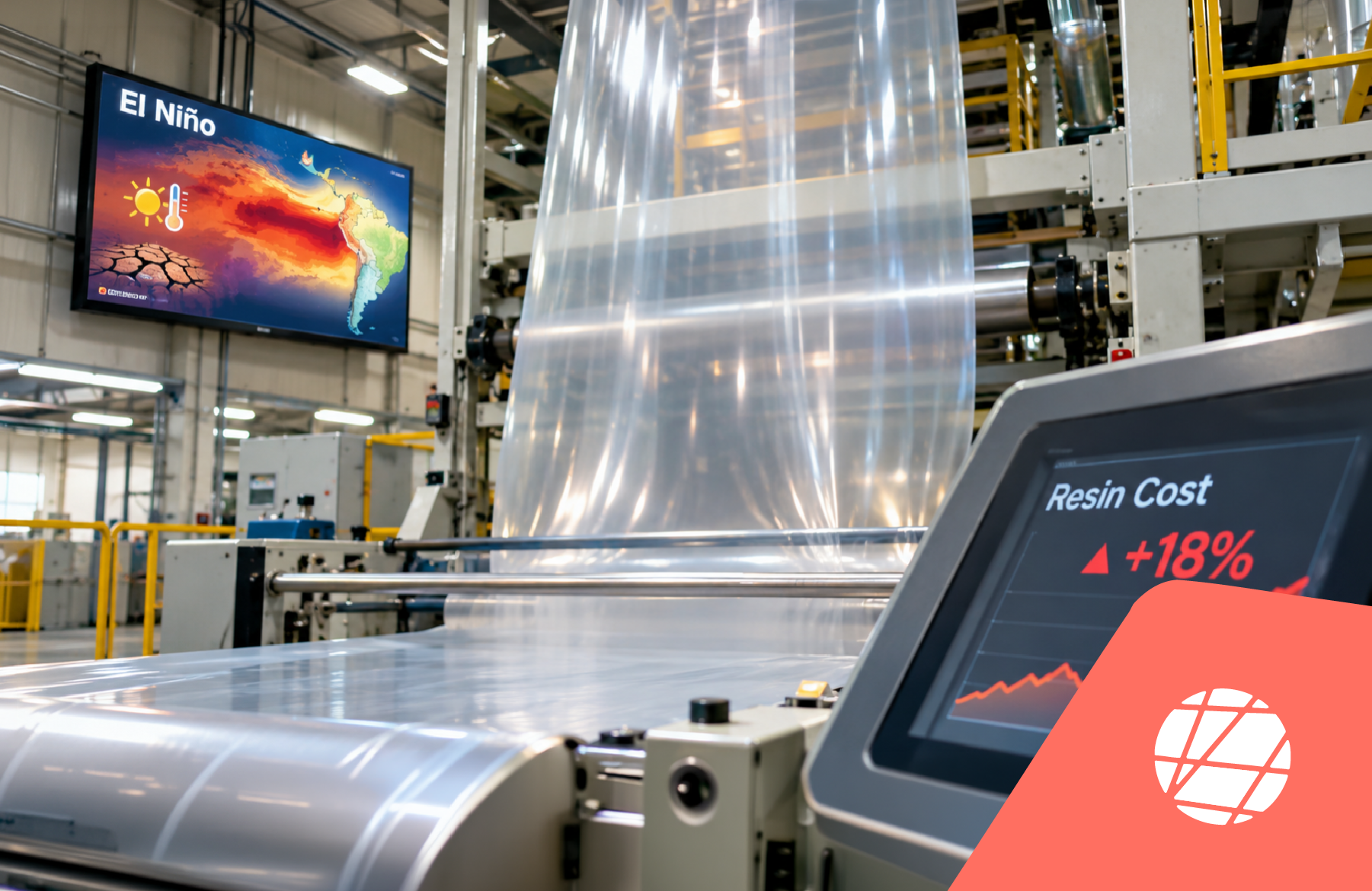
Your Resin Bill Has a Weather Forecast
Resin prices are closely linked to crude oil markets. HDPE and LLDPE prices have historically shown a strong correlation with crude futures. Converters usually treat that as background noise, until it isn’t.
In March 2026, the conflict involving Iran disrupted crude oil and petrochemical flows through the Strait of Hormuz. An energy shock quickly became a resin story, with polyethylene and polypropylene prices surging as supply tightened, Reuters reported.
That shock arrived overnight. This year’s El Niño comes with months of warning instead. NOAA’s Climate Prediction Center puts the odds of this El Niño reaching historic intensity during October–December at 83%, exceeding the intensity of previous events recorded since 1950. The World Meteorological Organization expects El Niño to persist through February 2027, with significant shifts in rainfall and temperature patterns and associated risks of floods, drought and extreme heat.
For converters, volatility can hit the P&L directly through energy, feedstock and operating costs. Brand owners may feel the impact one step removed: when converters face a resin price spike, they may seek price adjustments mid-contract or look for ways to reduce costs, potentially putting material consistency and packaging specifications under pressure.
Made From Stone™ reduces reliance on petroleum-based resin in blown PE film by replacing a portion of it with calcium carbonate. Combined with local-currency pricing, it offers another way to approach material costs and reduce exposure to oil-driven volatility.
When El Niño, OPEC or a shipping chokepoint moves resin prices, changing the formulation can change the equation. Not an ESG argument. A material-cost consideration your CFO can model on a spreadsheet.
Converters: Want to see what oil volatility has likely cost resin buyers like you over the past two years, and what Made From Stone™ could have meant for your material costs?
Brand owners: Want to understand where that same exposure could be sitting in your packaging contracts?
Curious what the difference could look like?
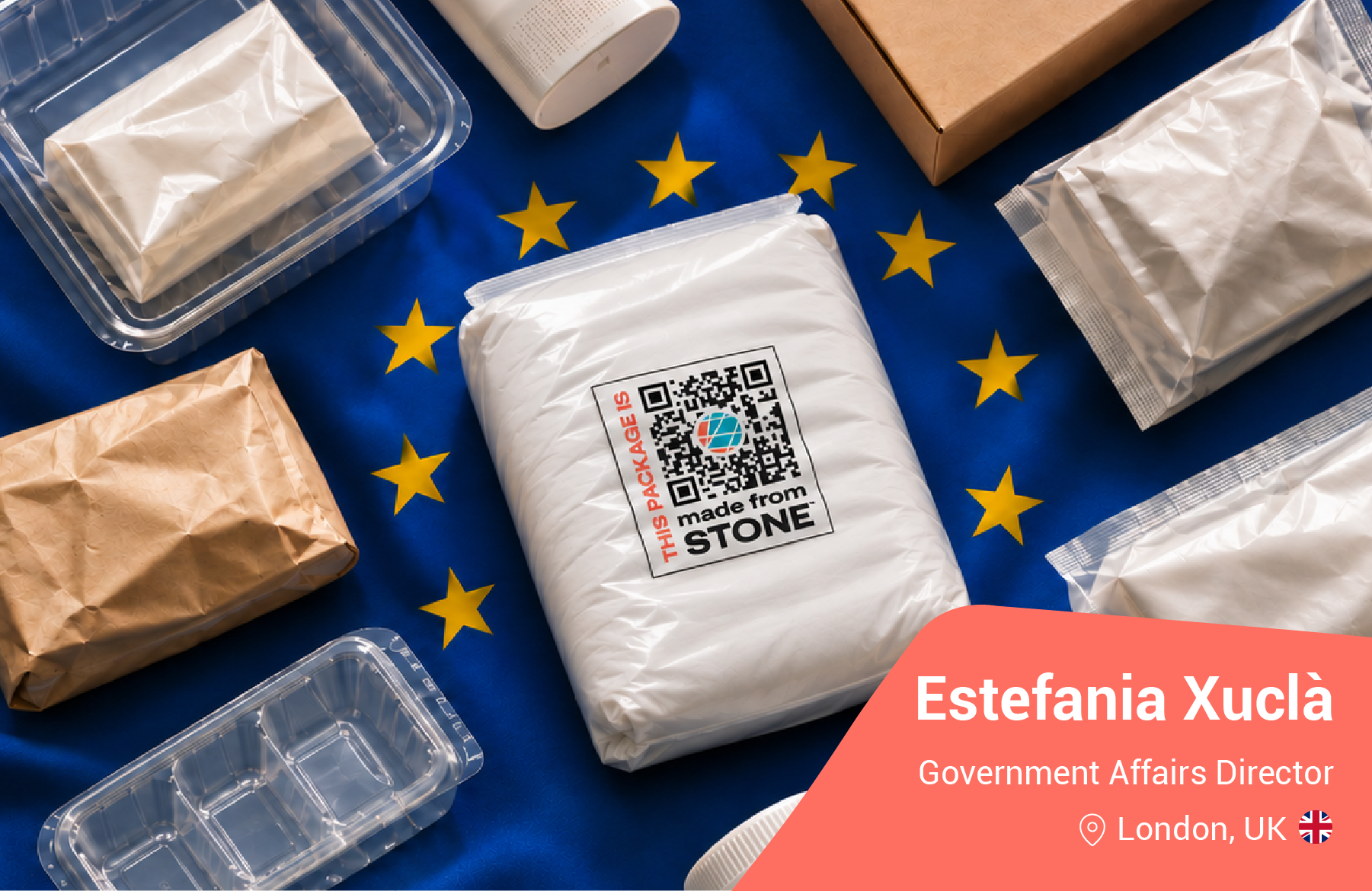
The QR Code Isn’t a Footnote
Imagine a pouch labeled “eco-friendly,” with a QR code next to it that reveals the packaging is 30% recycled plastic. Useful. Still doesn’t solve the actual problem: the claim on the front is vague, and since September 27, 2026, the EU no longer allows it.
The Empowering Consumers for the Green Transition directive now bans generic claims like “eco-friendly” unless they’re backed by recognized excellent environmental performance. “Contains 30% recycled plastic” is a specific claim. “Eco-friendly” alone does not qualify. A QR code can link to the evidence behind a specific claim, but it can’t rescue a vague one.
Here’s what most companies haven’t priced in: a claim is only as stable as the supply chain behind it. Change a material or a supplier eighteen months from now, and a claim already printed on a few hundred thousand packages can quietly become false with no new law required to make it so. At that point, it isn’t a line to fix in the next design file. It’s packaging already on shelves and in warehouses, a retailer auditing your claims and potentially delisting you, and—in several EU markets—fines that scale with the offense: France can levy up to 10% of annual turnover or 80% of a campaign’s spend for a misleading environmental claim; Italy’s competition authority can reach €10 million. That’s the real cost of treating a sustainability claim as marketing copy instead of a sourcing decision.
The real opportunity here isn’t bigger environmental promises. It’s claims brands and converters can actually prove, consistently over time, not just on day one.
Make the material do the talking. Let’s talk packaging.
The Toughest Test in Packaging? We Put Ours to the Test.
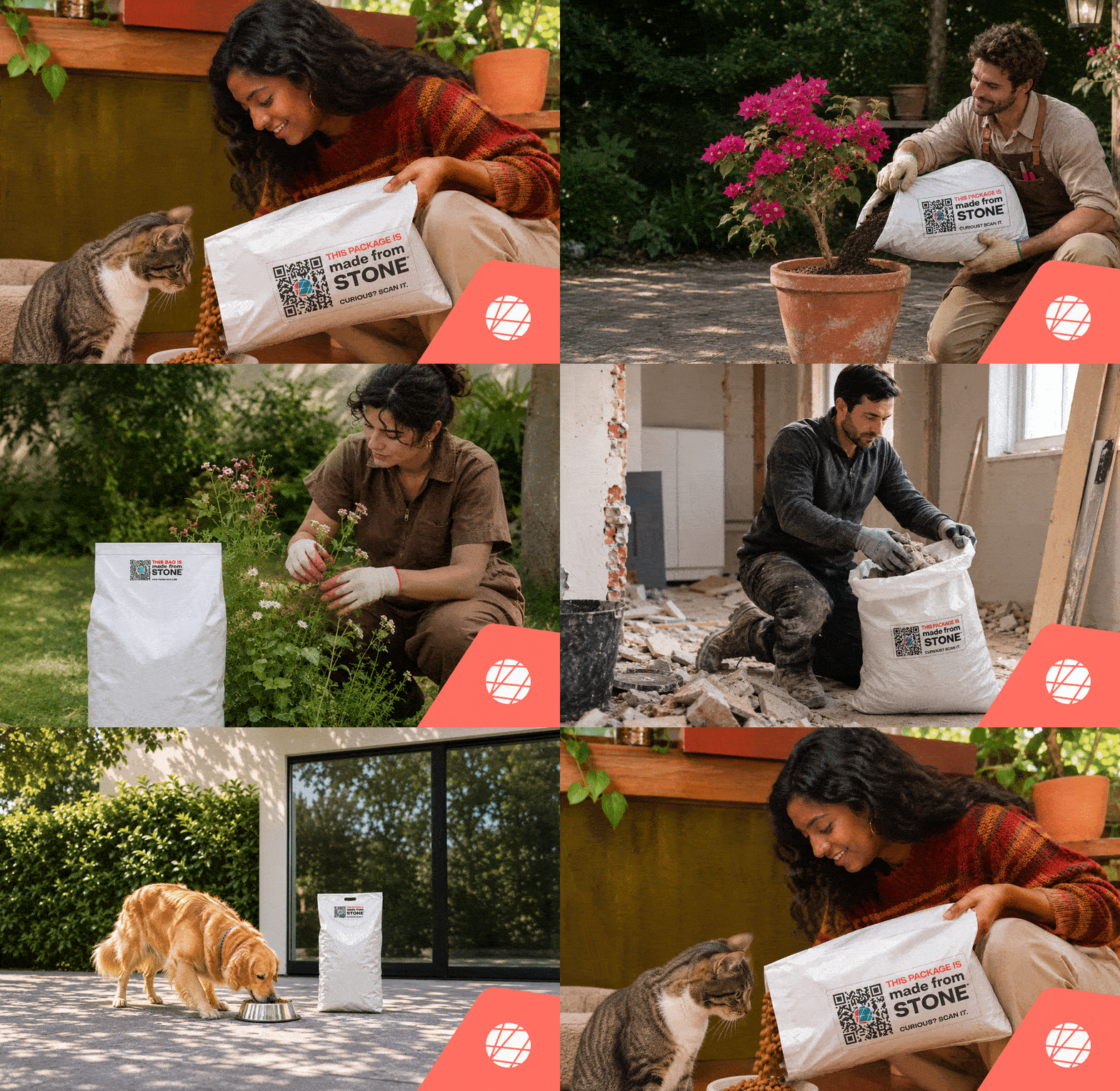
A bag of pet food gets stacked in a warehouse. A bag of fertilizer gets tossed into a truck. A sack of cement makes its way to a construction site.
Different applications, different demands. Same rule: if the bag fails, the product doesn’t get where it needs to go. So, can you change the material without compromising the job? We put it to the test.
In a blown-film production trial for heavy-duty bags, we tested Made From Stone™ against a current market product. Tensile strength met specifications, while tear resistance and dart-drop impact exceeded the market reference.
Here’s a vote of confidence that goes beyond marketing claims: our own Made From Stone™ compound travels thousands of miles around the world inside heavy-duty bags made with the same material. We trust it with our own supply chain.
And there’s no need to overhaul the production line. Made From Stone™ ran on existing blown-film equipment, with no new machinery required.
Different applications, different demands. But the principle stays the same: a heavy-duty bag has to earn its name.
Have a heavy-duty application that can’t afford to fail? Let’s put your specs to the test. Reach out to trade@madefromstone.com
When a Material Changes Its Narrative
What if your material is saying more than you think? Massimo Martinotti explores the hidden stories behind material choices, and how they shape what people value, perceive and expect from brands.
Massimo Martinotti is the founder of Starlight Effect, a strategic narrative consultancy. Over more than thirty years, he has helped brands across thirty countries translate identity, culture, and ambition into meaningful narratives. Learn more about Massimo and his work.
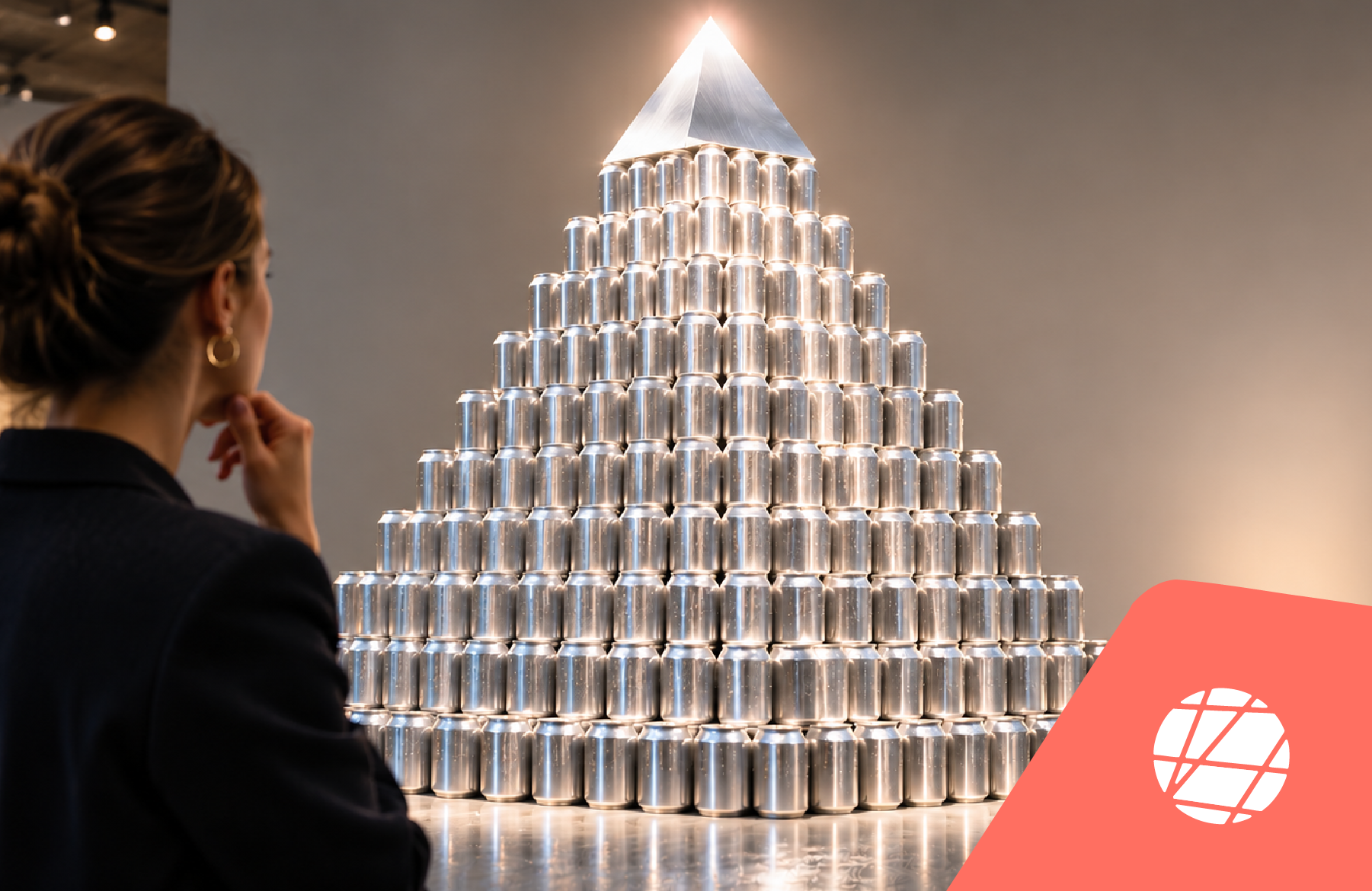
In December 1884, when the Washington Monument was finished, they placed a small aluminum pyramid at its summit. Before it was installed, the pyramid was exhibited at Tiffany’s in New York. At the time, aluminum was a precious metal. Extracting it was difficult and expensive, and it carried a narrative of technological achievement, rarity, and modernity.
Just two years later, the Hall-Héroult process made aluminum far cheaper to produce. And within a few generations, the same metal that had crowned a national monument was wrapping sandwiches and holding soda.
The metal was the same. Its cultural meaning had shifted.
Materials come with stories attached. For much of the twentieth century, plastic represented progress: lighter products, lower costs, greater accessibility. Today, it is often associated with waste and environmental damage. The material hasn’t fundamentally changed. What has changed is how people perceive it.
Companies working with materials tend to focus on technical, aesthetic, or environmental performance. That makes sense. What they often overlook are the narratives people already associate with those materials, both positive and negative, sometimes at the same time.
An alternative material may offer a real functional or environmental improvement. But its broader opportunity may lie elsewhere: in challenging an established story about what makes a product valuable, desirable, or appropriate.
When we work with companies, we examine the cultural codes embedded in their materials and ingredients, as well as the meanings attached to their origins. For a chocolate company, we explored the associations surrounding Ecuadorian cacao, the sugarcane-based cardboard used for its packaging, and the materials chosen for its in-store displays. Each element contributed to how the product was perceived, from its origin to the experience of encountering it on a shelf.
The same thinking applies to coffee. Costa Rican beans may evoke a particular origin and tradition, while the cup and wooden packaging introduce other associations.
The question isn’t just what a material is made of. It’s what people believe it says about the product.
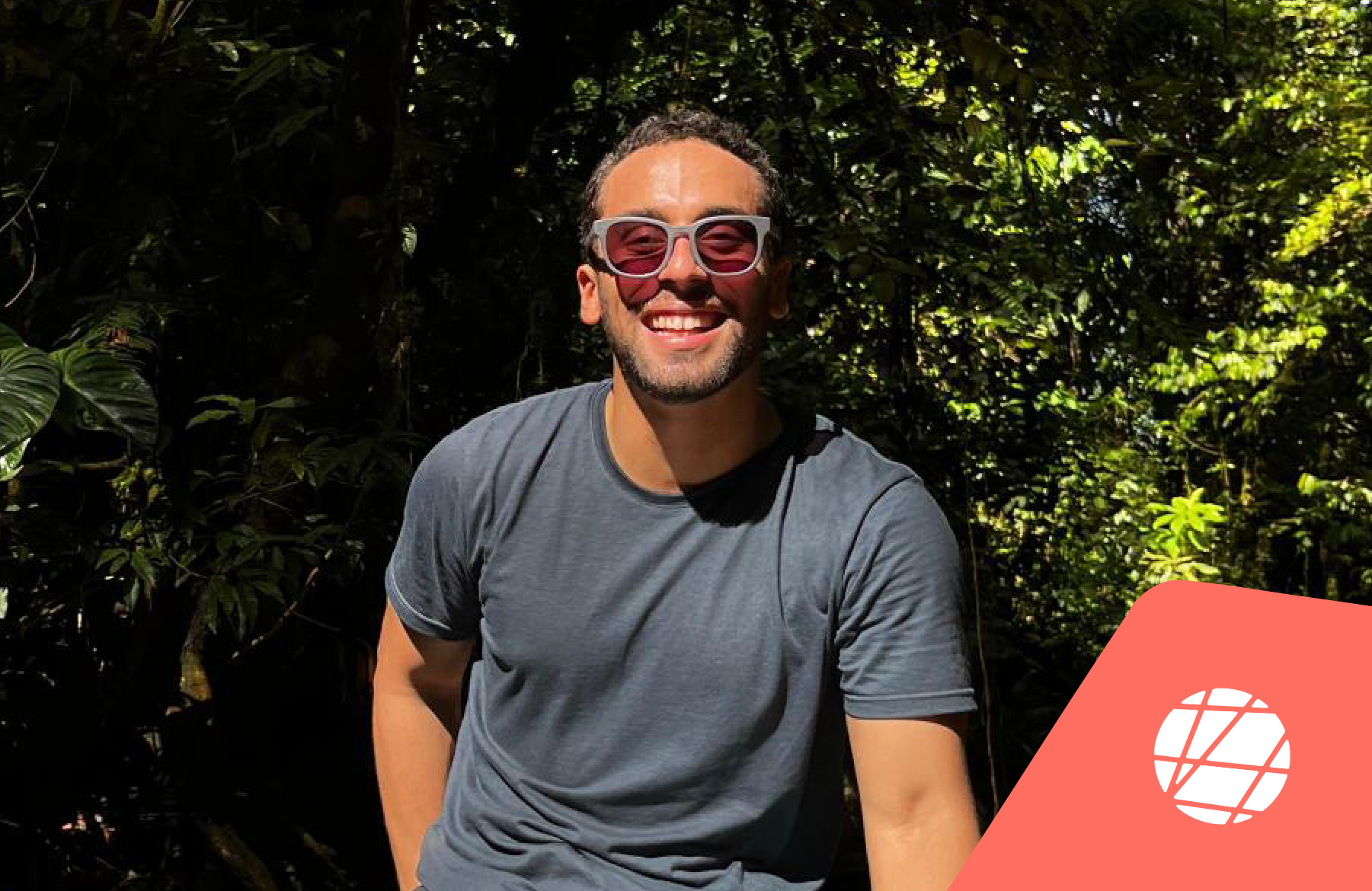
Rockstar of the Month
The people who power Okeanos.
Miguel Carrasco | Technical Service & Development Associate | Quito, Ecuador
From Quito to China, Miguel is turning material innovation into real-world possibilities. Discover how technical testing, cross-team collaboration, and a passion for positive impact help bring better products to life.
His Impact: He bridges material innovation and real-world applications, helping turn customer ideas into practical solutions through technical development and testing.
What his role makes possible at Okeanos
Innovation becomes meaningful when ideas turn into real products. Miguel helps bridge the gap between Okeanos’ technology and its practical applications, working across technical development, testing, and customer needs to bring new possibilities to life.
He’s currently in China conducting performance tests on Made From Stone™ materials for waste collection bag applications, as part of a project for a leading global consumer goods company. His work helps ensure that innovative materials can meet real-world demands and move closer to commercial adoption.
What his role touches
- Support technical development and testing for real-world product applications
- Evaluate material performance against customer needs and application requirements
- Collaborate across teams to turn technical challenges into practical solutions
In Miguel’s words
What does your role enable at Okeanos?
My role helps turn our clients’ ideas and dreams into tangible products and solutions. By bringing the technical side of our work to life, I help transform concepts into real applications that deliver value and make new possibilities a reality.
What’s something people don’t usually see?
Something people may not always see is my ability to look beyond the technical aspects of my role and explore broader business and management perspectives. I enjoy connecting with different teams, understanding their challenges, and contributing ideas that go beyond the technical side of things.
What motivates you?
I’m motivated by the belief that my work can make a tangible and positive change in the world. Knowing that what I do can contribute to something meaningful is what drives me every day.
Outside work: Outside of work, I like boxing and making healthy cakes and desserts, two hobbies that I really enjoy in my free time.
Learn more about career opportunities at Okeanos.