
This month’s Set in Stone® focuses on the shift from innovation to execution. Because while innovation gets attention, only materials that hold up at commercial scale earn real adoption.
Okeanos® Business Newsletter – February 2026
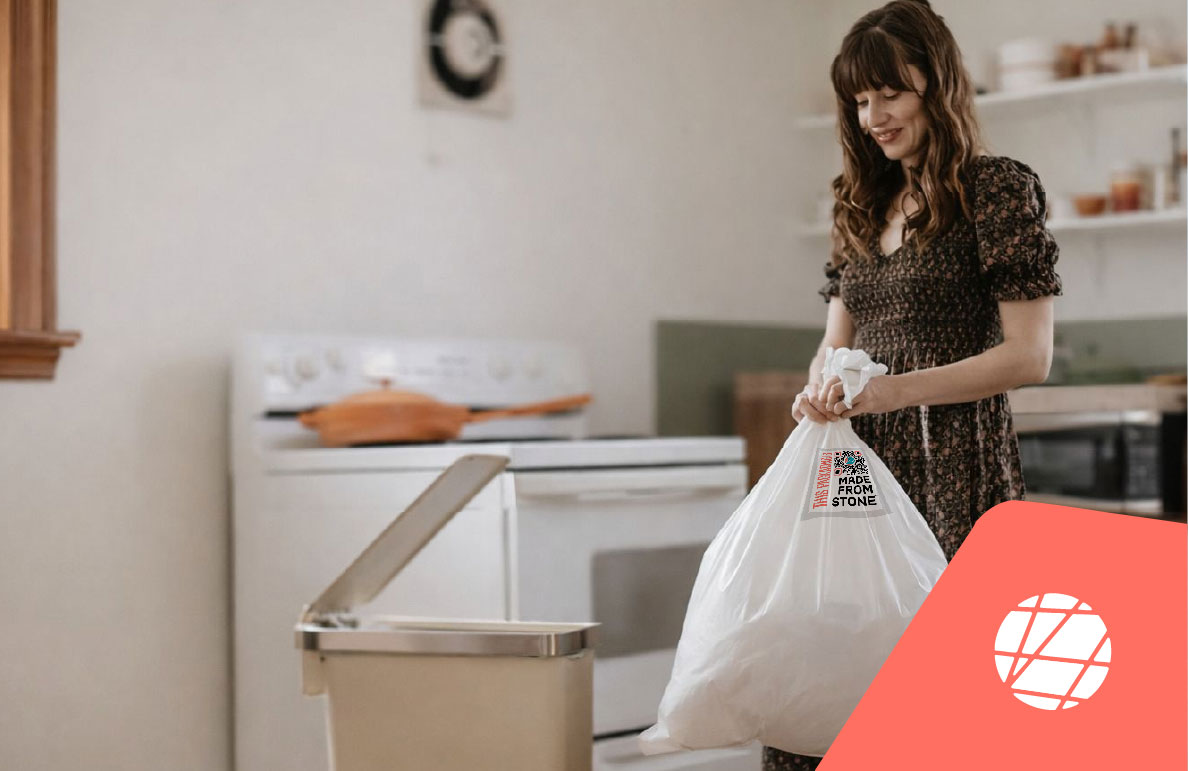
Trash Bags: The Stress Test Category
Some packaging formats allow flexibility. Trash bags do not.
They operate under constant load, puncture risk, moisture, and heat, with zero tolerance for failure. Performance isn’t a feature here. It’s the baseline.
That’s why this category matters.
If a material performs in trash bags, it demonstrates three critical things:
- Mechanical strength under stress
- Stability at commercial production speeds
- Compatibility with existing extrusion and converting lines
Made From Stone™ trash bags are not a concept. They are running at scale.
For manufacturers, this signals drop-in compatibility. For brands, it signals plastic and CO₂ reduction without risking consumer trust. Because in this category, good intentions don’t survive. Only performance does.
If you’re evaluating new materials for films, liners, or high-stress applications, let’s assess your specifications together.
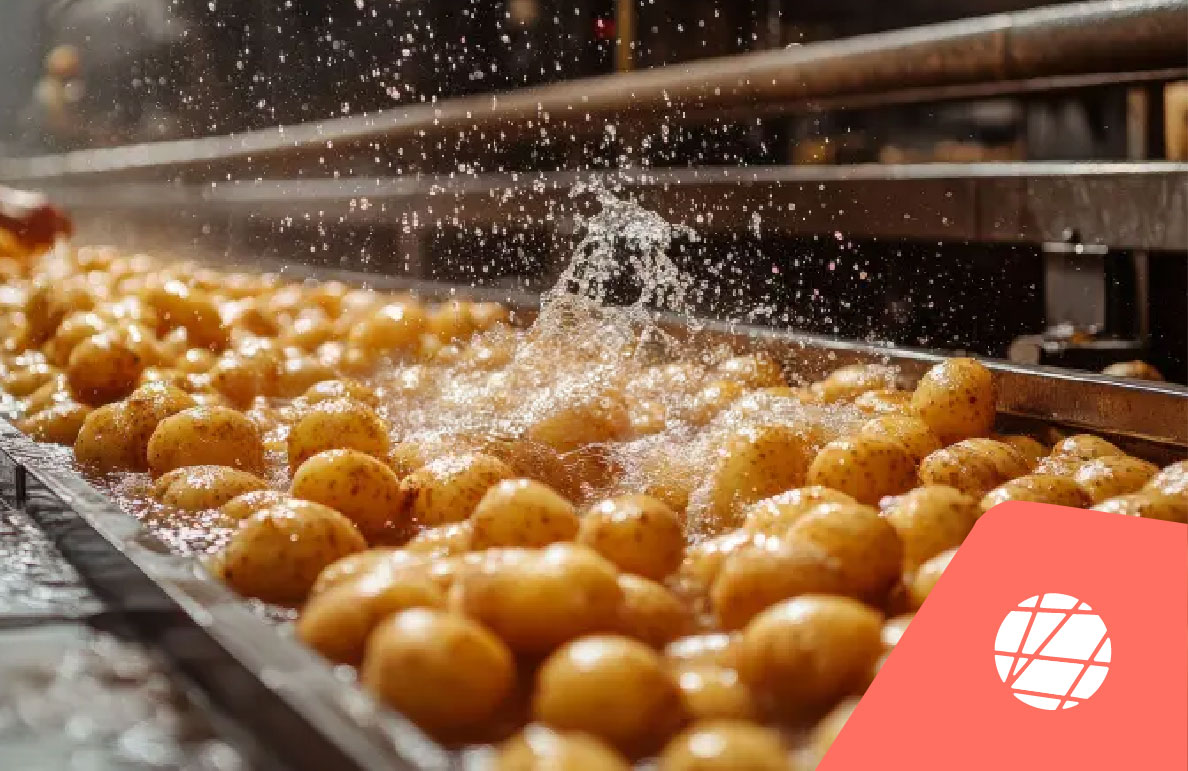
Potato Packaging Made from Stone and Potatoes
Before potatoes become potato chips, recovered starch begins a second life in compostable materials.
In many facilities, that starch is recovered from the water stream and captured instead of discarded. A by-product of food processing becomes a usable raw material already embedded in the agricultural system.
Not crops grown for packaging. Not food diverted from supply.
Recovered starch. Reengineered.
Our new compostable Made From Stone™ compound combines this plant-based starch with certified compostable resins, engineered for strength, flexibility, and processing reliability.
Because compostable is not a marketing term. It’s a measurable standard.
Frameworks like ASTM D6400 and EN 13432 require materials to biodegrade under controlled conditions within defined timelines. Certification demands testing. Production demands consistency.
Compostable only matters if it performs. And if it runs.
If you’re exploring certified compostable pathways that integrate into real converting environments, we’re ready.
When Materials Do the Talking
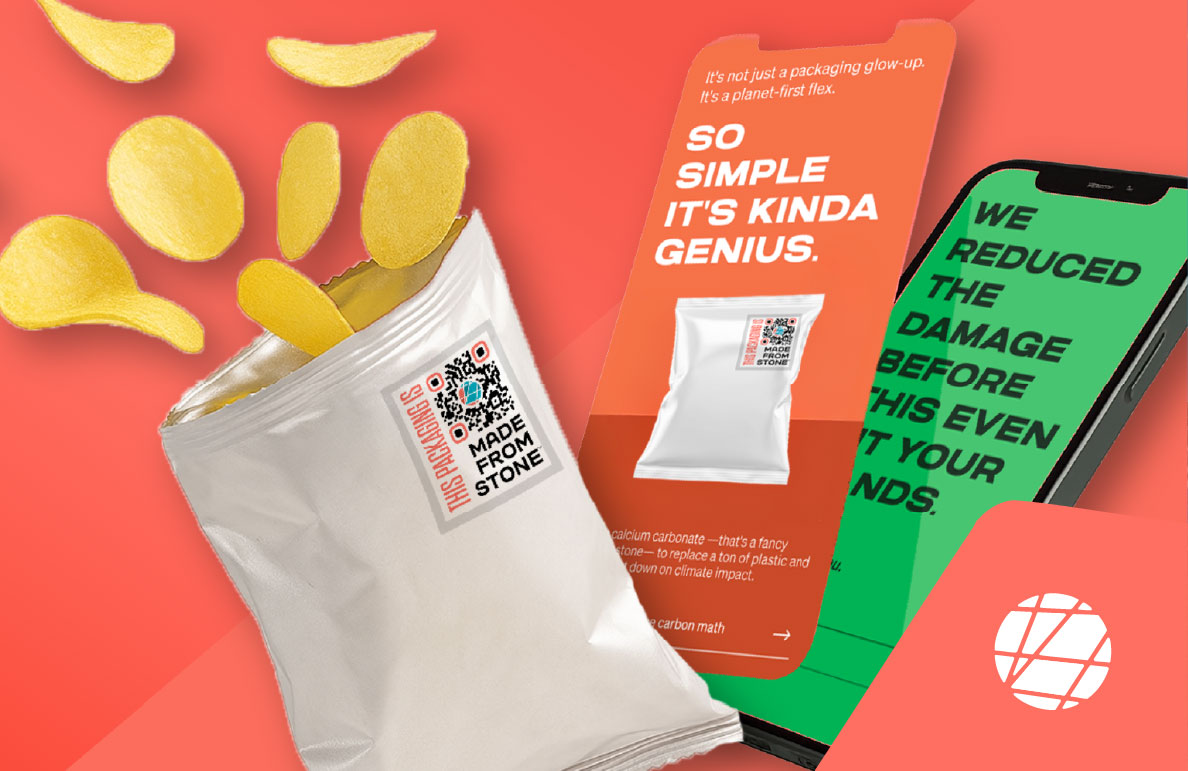
A badge. A QR. And a material that doesn’t hide. Most packaging makes promises. This one shows its work.
The Made From Stone™ badge is a signal that the packaging you’re looking at is made differently, not in how it looks or functions, but in the material behind it. Instead of relying entirely on plastic, Made From Stone™ replaces a large portion of plastic with calcium carbonate (stone).
That one change means:
- less plastic
- lower CO₂
- the same performance you expect
Same product. Same use. Different material doing the heavy lifting.
The QR code next to the badge is there for people who want to know more. Scan it, and you’ll see how that material choice reduces plastic and CO₂, explained clearly, without jargon, and in a way that works across products and markets.
We built this system because care shouldn’t be loud or complicated. If a material genuinely makes a difference, it should work quietly, explain itself honestly, and stay out of the way.
You don’t have to shop differently. The product doesn’t have to work differently.
Only the material does.
That’s what it means when materials do the talking.
If you’re curious how this material approach could work for your packaging, or how it scales across categories and regions, that’s where the conversation starts.
Curious how this could work for your packaging? Reach us at trade@madefromstone.com
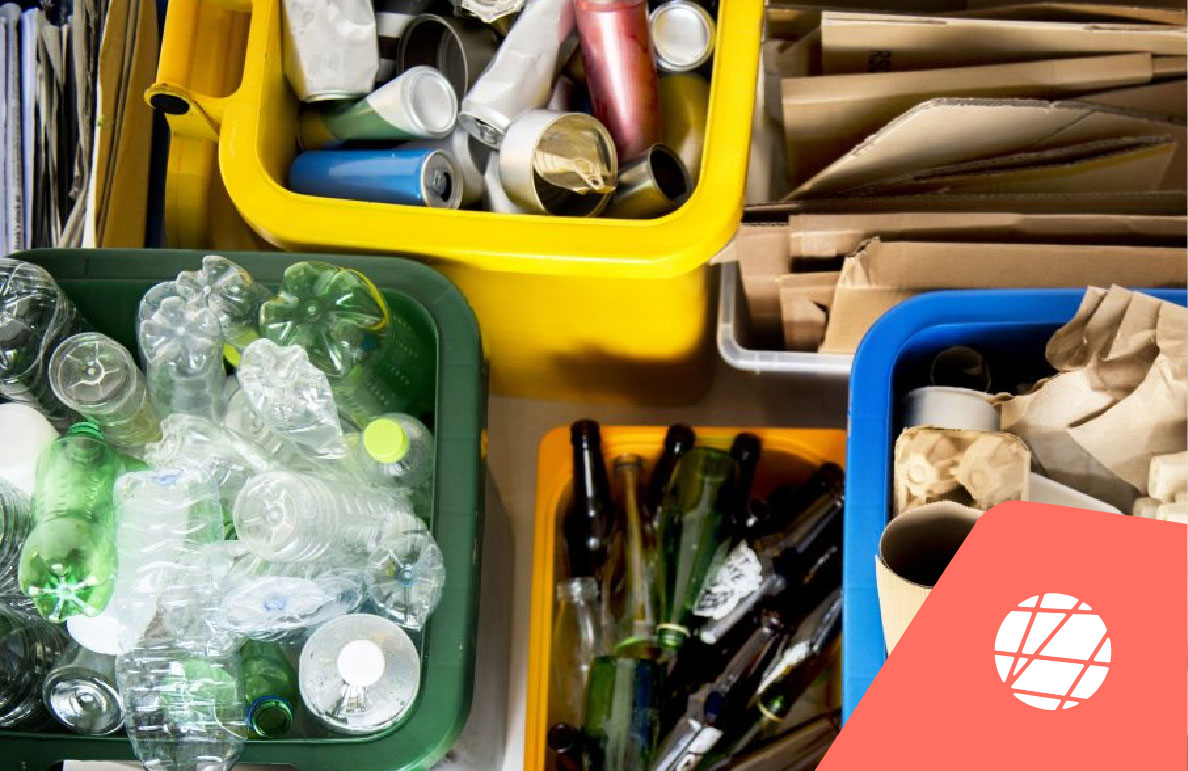
Recyclable Doesn’t Mean Recycled. And That’s the Problem.
Recyclable in theory doesn’t mean recycled in practice. Here’s where the system breaks.
For years, “recyclable” has been one of the most powerful words in packaging. It signals responsibility. Compliance. Intent.
But there’s a gap between being recyclable in theory and being recycled in practice. According to the OECD Global Plastics Outlook (2022), only around 9% of plastic waste globally is actually recycled. The rest is landfilled, incinerated, or mismanaged. That statistic hasn’t moved proportionally with the growth in recyclable claims. So what’s happening?
Most packaging today may be technically recyclable under ideal conditions. But real-world systems are not ideal. Collection systems vary widely by region. Sorting infrastructure has limits. Contamination reduces recovery rates. Flexible and multilayer formats remain difficult to process at scale.
At the same time, global plastic production continues to grow. Waste volumes have more than doubled since 2000 (OECD). This creates structural tension: Even if recyclability improves, total material volume can outpace system capacity.
The Pew Charitable Trusts’ “Breaking the Plastic Wave” report made this clear: improving recycling alone cannot close the gap if production growth continues. This doesn’t mean recyclability isn’t important. It means it’s incomplete.
The more fundamental question for industry is shifting from: “Is this recyclable?” to: “Does this reduce the total material burden entering the system?” That shift changes how companies evaluate materials, packaging formats, and design trade-offs. Even the most efficient waste system in the world cannot process material that doesn’t need to exist in the first place.
Recyclable is a design attribute. Reduction is a systems strategy. And the next phase of material innovation will be defined by that difference.
Ready to reduce impact before it enters the system? Let’s talk materials.

Rockstar of the Month
The people who power Okeanos.
Diana Pérez | Sales Director, LATAM | Bogotá
Diana turns global strategy into local growth across LATAM. Behind every deal is deep coordination, market insight, and long-term planning to build lasting customer value and a stronger regional presence.
Her Impact: She drives profitable growth across LATAM by connecting global strategy with local execution and building long-term customer value.
What her role makes possible at Okeanos
Growth isn’t just about closing deals. Diana leads commercial initiatives across LATAM that deepen customer relationships, expand market presence, and turn Okeanos’ global direction into results on the ground, with sustainable revenue and strong teams behind it.
What her role touches
- Strengthen strategic customer relationships across the region
- Lead commercial initiatives that expand market presence
- Align cross-functional teams, insights, and planning to drive sustainable growth
In Diana’s words
What does your role enable at Okeanos?
It enables profitable growth across LATAM by connecting global strategy with local execution. I lead commercial initiatives that strengthen customer relationships, expand market presence, and drive sustainable revenue growth.
What’s something people don’t usually see?
The constant cross-functional coordination, market analysis, and long-term planning behind each commercial decision to ensure sustainable and strategic growth.
What motivates you?
Building long-term value, for our customers, for Okeanos, and for the teams I work with. Driving growth while developing people and creating impact in the region truly inspires me.
Outside work: My main motivation is my family. I’m focused on building a strong and stable future for my growing family, especially with my baby on the way. I also enjoy spending time with my dogs, they bring balance and joy to my life.
Learn more about career opportunities at Okeanos.