
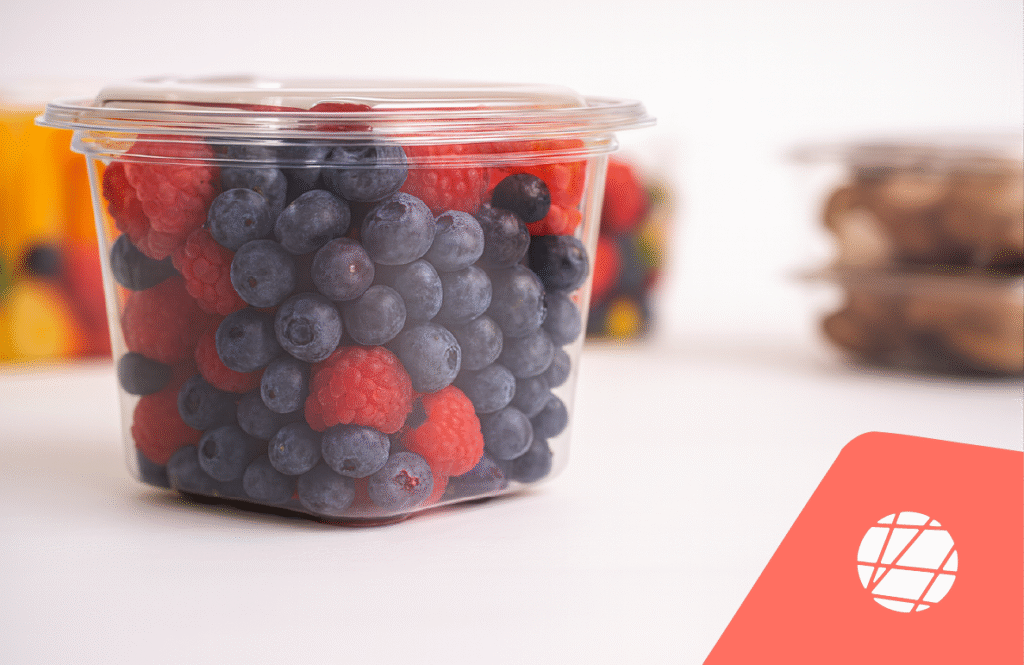
Recycled content is becoming a regulatory requirement worldwide, but sourcing consistent, food-grade, and Food waste generates 8–10% of global emissions, and in most categories the food inside a package produces 7–10x more CO₂ than the packaging itself. As retailers expand refill and “naked produce” pilots, many are seeing spoilage rise. WRAP and USDA studies show increases of 20–30% when protective packaging is removed.
That wasted product carries a far higher climate cost than the material that protects it. The solution isn’t no packaging; it’s smarter, lighter, better-performing packaging that reduces both plastic and loss.
New innovations gaining traction include mineral-enhanced breathable films that extend shelf life, moisture-adaptive produce trays that cut shrink, and hybrid dairy packaging with lower CO₂ and improved barriers.
Circularity isn’t just about reducing packaging; it’s about reducing waste overall.